
Quick answer
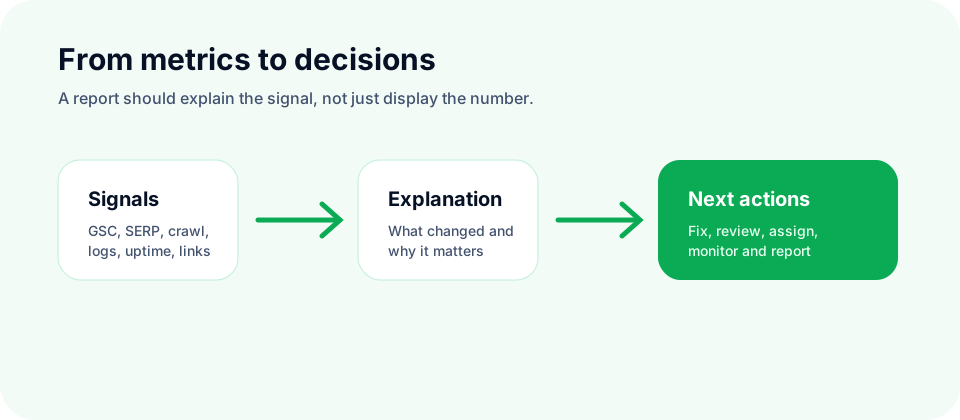
A good SEO report should explain what changed, why it matters, and what action should happen next. It should not be a static list of metrics. For owners, team leads, SEO teams, and agencies, the real value of reporting is decision support: clear priorities, risks, and recommended tasks.
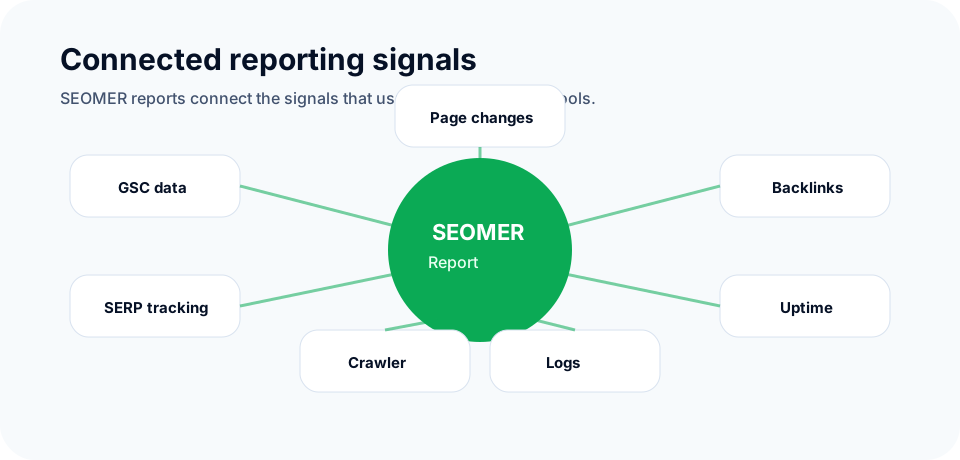
SEOMER approaches reporting as a continuous audit layer. The platform collects signals from monitoring, crawling, Google Search Console, SERP tracking, uptime, logs, links, and project changes, then turns them into structured reports. Code-level checks provide the factual foundation, while AI-assisted explanations help make the report readable and useful for humans.
- Reports show what changed across the project.
- They explain why the change matters for SEO and website health.
- They help owners and team leads decide what to do next.
- They can support PDF-style client reports, internal reviews, and task planning.
Why most SEO reports fail
Many SEO reports are technically correct but practically weak. They include charts, tables, screenshots, and exported metrics, but they do not clearly explain what happened or what should be done next.
That creates a common problem: the client receives a report, the team lead opens it, and everyone still needs another meeting to understand the actual priority.
Common mistake
A report that only says “clicks dropped” or “errors increased” is not enough. The useful question is: what changed before that happened, what caused it, and which action should be assigned first?
Good reporting should reduce confusion. It should turn website signals into an operational picture that helps people make decisions faster.
Reporting as a continuous audit
SEOMER treats reports as more than a monthly PDF. Reports are built from continuous monitoring, which means they work like an ongoing audit of the project.
Instead of checking a website once and forgetting it, the system keeps watching the important signals:
- technical SEO changes;
- page title and description updates;
- crawl issues and indexation signals;
- Search Console movement;
- SERP position changes;
- uptime and server availability;
- log events and technical errors;
- link status and competitor movement.
This makes reports more useful because they are based on a sequence of events, not a single snapshot.
SEO impact
Regular reporting works best when it explains change over time. A one-time number can show the current state. A continuous report can show whether the project is improving, stagnating, or moving into risk.
What a useful SEO report should explain
A strong SEO report should answer practical questions that matter to the business and to the team working on the site.
What changed?
The report should show which pages, metrics, and technical signals changed during the selected period. This may include new pages, changed titles, updated descriptions, crawl errors, lost links, downtime, ranking movement, or visibility changes in Google Search Console data.
Why does it matter?
Not every change is important. A useful report separates noise from risk. A small title edit on a low-value page may not require attention. A group of high-value pages losing indexation or rankings does.
What should be checked next?
The report should guide investigation. For example, if impressions drop, the next step might be checking SERP positions, crawl status, indexation, recent content changes, or uptime incidents.
What action should be taken?
This is the part many reports miss. A good report should help turn findings into tasks: update content, fix broken pages, restore missing links, review title changes, investigate logs, or check whether a deployment affected SEO.
AI-assisted reports on top of code-level checks
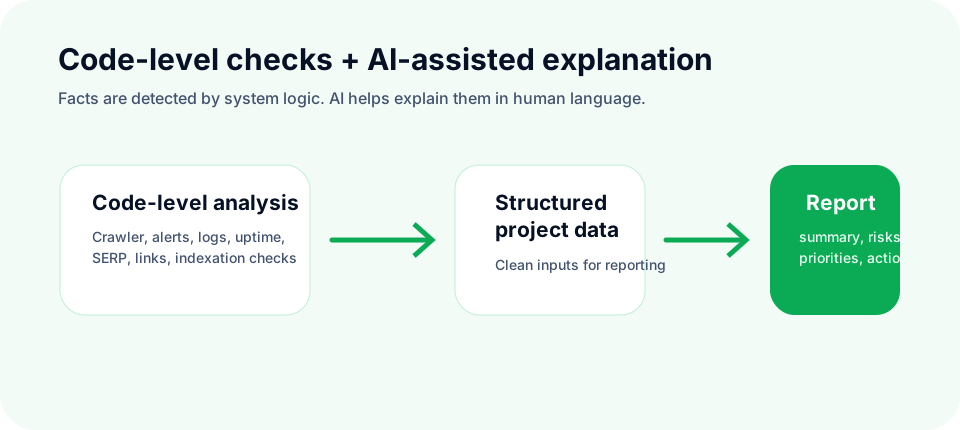
SEOMER does not rely on AI to guess whether something is broken. The core checks are handled at the code level: crawler results, uptime status, log events, indexation checks, SERP movement, link monitoring, alerts, and project changes.
This matters because reporting needs a factual foundation. If a server returns 500 errors, a page disappears from the index, or a title changes, that should be detected by system logic, not invented by a language model.
AI is used as an explanation layer on top of structured data. It helps turn technical findings into human-readable summaries, priorities, and recommendations.
SEOMER approach
Code-level analysis detects what happened. AI-assisted reporting helps explain what it means and how the team should respond.
That combination is important. Owners do not want a raw dump of metrics. Team leads do not want to spend hours translating exported tables into tasks. SEO teams need clarity, context, and priorities.
Reports for owners, teams, and agencies
Different users need different reports.
An owner wants to know if the site is healthy, whether the team is making progress, and which risks can affect traffic or revenue. A team lead wants to know what should be assigned next. An SEO specialist wants details: affected pages, queries, crawl signals, rankings, and technical issues.
SEOMER reports are designed to support all of these views. The same data can help create high-level summaries for management and more detailed workflows for the people doing the work.
Useful report outputs
- executive summaries for owners;
- project health reports for team leads;
- technical audit summaries for SEO and developers;
- client-ready PDF-style reports for agencies;
- weekly or period-based reports for ongoing monitoring.
The goal is not to make reports “pretty” only. The goal is to make them understandable, credible, and actionable.
From report to tasks
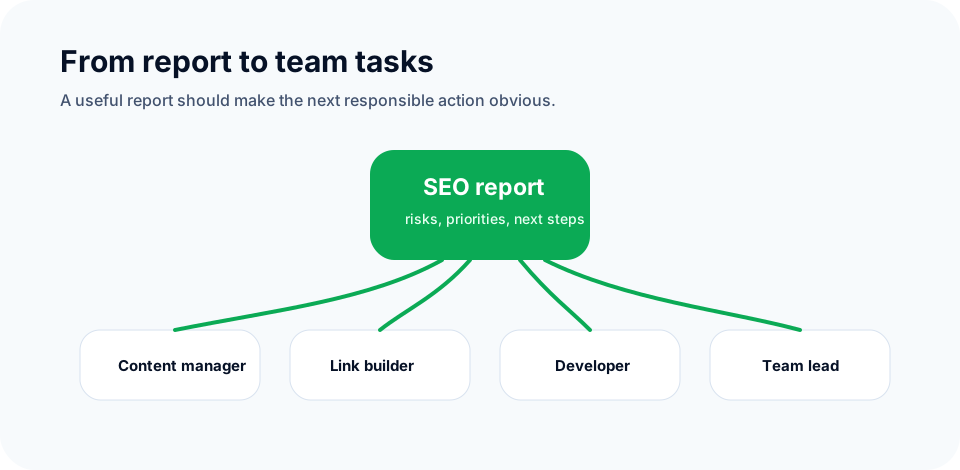
The strongest report is the one that helps the team move. After reading it, a team lead should not need to start from zero. The report should already suggest what needs attention and who should likely handle it.
For example:
- content issues can become tasks for a content manager;
- lost or changed backlinks can become tasks for a link builder;
- crawl errors, uptime incidents, and log anomalies can become tasks for a developer or webmaster;
- query mismatch can become a content optimization task;
- SERP drops can trigger competitor review and page-level analysis.
This is where reporting becomes decision support. It does not only describe the state of the site. It helps the team decide what to fix, review, or improve first.
Best practices for SEO reporting
Start with the audience. A report for an owner should not look the same as a technical report for an SEO specialist. Keep the executive summary short, then provide deeper details where needed.
Separate critical issues from background noise. If everything looks urgent, nothing is urgent. Reports should make priorities obvious.
Use connected data. A ranking drop is easier to understand when it is connected with page changes, crawler findings, SERP monitoring, GSC data, logs, backlinks, and uptime monitoring.
Finally, always include next actions. The report should end with decisions, not confusion.
For a complete view of how monitoring signals feed reports, read the SEO monitoring guide.
Reports are most useful when they connect Google Search Console context, smart alerts and monitoring data into clear next actions.
Conclusion
A good SEO report is not just a collection of numbers. It is a decision-making tool.
It should explain what changed, why it matters, what risks exist, and what the team should do next. For owners and team leads, this is the difference between “we have data” and “we know what to do.”
SEOMER builds reports on top of continuous monitoring and code-level checks, then uses AI-assisted explanations to make the results clear, readable, and actionable. That turns reporting into a practical layer of website intelligence — not another document nobody wants to read.