
Quick answer: SEO monitoring is the continuous process of tracking the signals that affect organic visibility: uptime, crawlability, logs, Google Search Console data, SERP movement, technical errors, alerts, backlinks, and website changes.
For teams, the value is not only seeing data. The value is knowing what changed, why it matters, and what should be fixed before traffic is lost.
- Track uptime, crawl behavior, GSC metrics, SERP movement, and technical health.
- Connect monitoring signals instead of checking isolated tools.
- Use alerts to react before SEO issues become traffic losses.
- Build a workflow where owners, SEO teams, and developers see the same risk picture.
Table of contents
What SEO Monitoring Actually Means
Monitoring Is Not Just Uptime
For example, teams can use an uptime monitoring tool to detect availability problems, then compare those incidents with logs, GSC data and ranking movement.
SEO monitoring is often misunderstood as simple uptime tracking. Uptime matters, but it is only one layer. A website can be online and still lose visibility because important pages are not being crawled, server errors are repeating, Google sees different queries than expected, or competitors are moving faster in the SERP.
A proper monitoring workflow combines availability, crawl activity, indexation, search visibility, technical errors, content changes, and alerts into one system.
Start with uptime monitoring, but do not stop there.
Why Monitoring Is Critical for SEO
Most SEO problems are not discovered at the exact moment they happen. They usually become visible later, when traffic drops, pages fall out of the index, or rankings have already moved.
Monitoring gives teams a shorter reaction window. Instead of waiting for the next manual audit, the system shows when something starts going wrong.
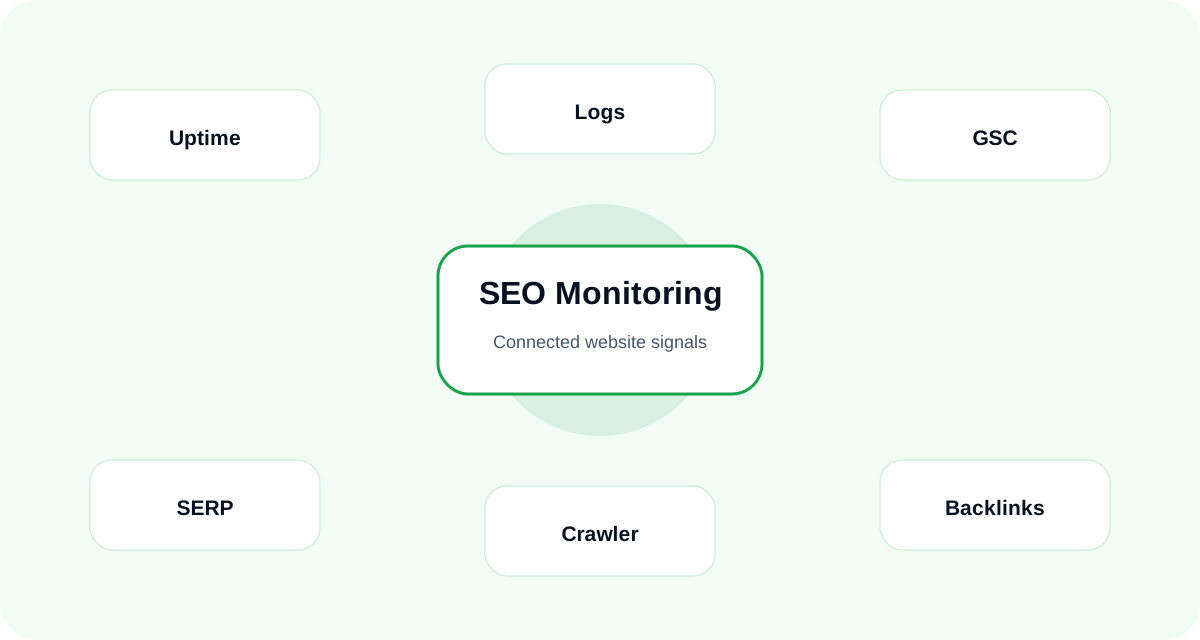
Core SEO Monitoring Signals
Uptime and Availability
If a website is unavailable, search engines cannot crawl it reliably. Repeated downtime can slow updates, delay indexing, and damage trust. Availability issues are especially risky for revenue pages, product pages, landing pages, and high-priority SEO pages.
Related tool: uptime monitoring.
Log Monitoring and Bot Behavior
When you analyze server logs, you can see crawler behavior directly instead of relying only on delayed third-party reports.
Logs show what actually happens on the server. They reveal Googlebot visits, AI bot activity, error patterns, suspicious requests, fake bots, entry paths, and exit paths.
For SEO, this helps teams understand whether important pages are being crawled, whether bots are wasting crawl activity on low-value URLs, and whether technical issues repeat across specific sections.
Related tool: log monitoring.
Google Search Console Data
Raw Google Search Console data becomes stronger when it is connected with crawler checks, SERP movement and technical monitoring.
Google Search Console shows clicks, impressions, average position, pages, and queries. But GSC data needs context because it is delayed and does not explain why a change happened.
SEOMER connects GSC with crawl results, SERP movement, page changes, logs, and reports so teams can move from raw metrics to decisions.
Related tool: Google Search Console dashboard.
SERP Monitoring
Use SERP monitoring to validate whether technical and content changes actually affect search positions.
SERP monitoring shows how positions move in search results. It helps validate whether changes on the site are reflected in rankings, whether competitors are moving, and whether a drop is isolated or part of a broader search shift.
Related tool: SERP monitoring.
Crawler and Technical Analysis
A website crawler tool helps reveal structural problems that can explain drops in crawling, indexation or visibility.
A crawler helps detect broken pages, missing elements, unexpected redirects, weak structure, indexation risks, and page-level SEO problems. In a monitoring workflow, crawler data becomes even stronger when compared with logs, GSC, and SERP movement.
Related tool: crawler and technical SEO audit.
How Monitoring Signals Work Together
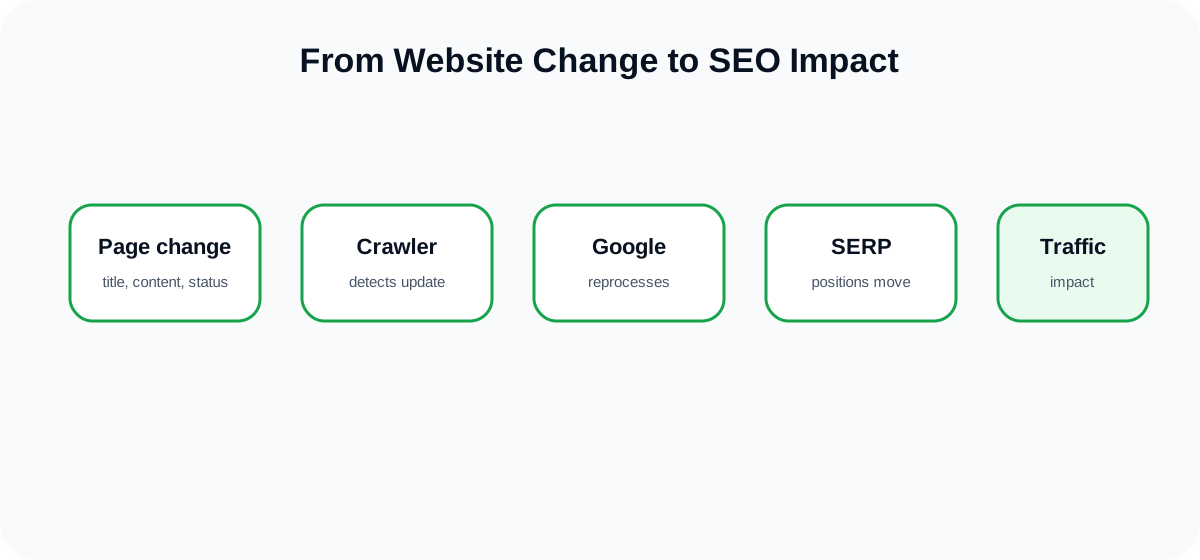
From Change to Impact
SEO is a cause-and-effect system. A page changes, a crawler detects it, search engines reprocess it, SERP positions move, and traffic changes later. The problem is that these steps usually live in different tools.
Why Isolated Tools Do Not Work
Separate tools create gaps. Uptime tells you if the site is reachable. GSC tells you search metrics. Logs show bot behavior. SERP tools show position movement. A crawler shows structure.
The real value appears when these signals are connected into one workflow.
SEOMER tip: SEO monitoring becomes powerful only when signals are connected. A single metric may show a symptom; combined data points reveal the cause.
Alerts and Real-Time Reaction
Why Alerts Matter
Monitoring without alerts is passive. Alerts turn observation into action. They help teams react to downtime, technical errors, ranking movement, lost links, suspicious activity, crawl problems, and critical changes.
Good alerts reduce manual checking and allow teams to focus on work instead of constantly watching dashboards.
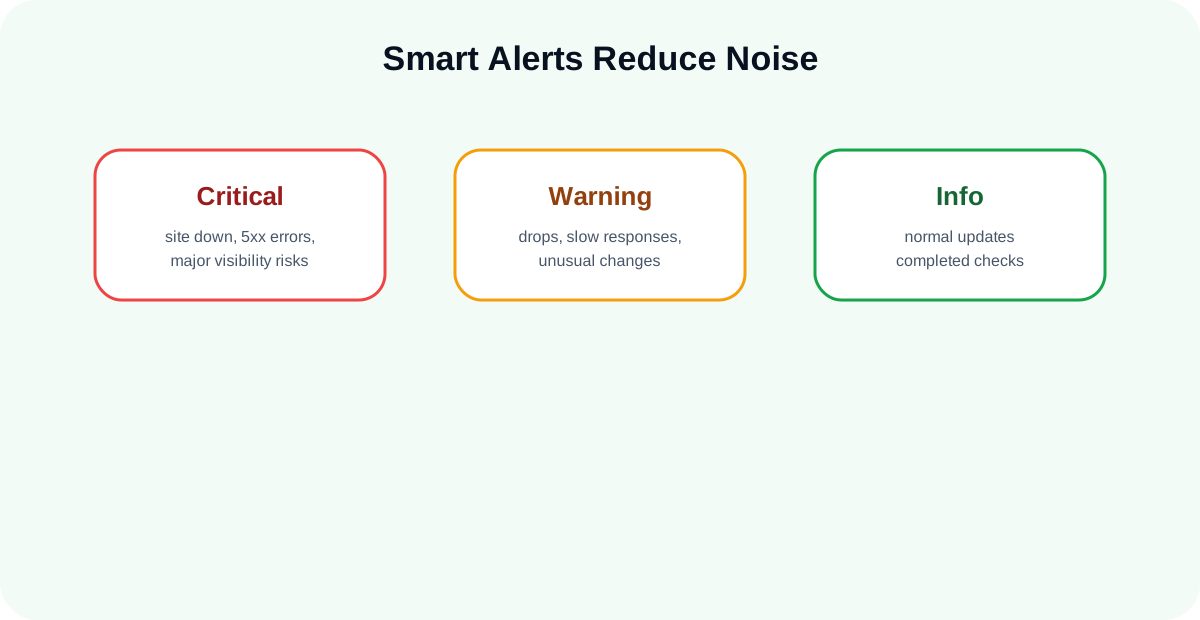
Alert Priorities
Alerts should not all have the same weight. A useful monitoring system separates critical, warning, and informational signals.
- Critical: downtime, repeated 5xx errors, important pages unavailable, severe visibility risks.
- Warning: unusual changes, slower responses, ranking movement, repeated crawl issues.
- Info: normal updates, completed checks, low-priority observations.
How Monitoring Prevents Traffic Loss
Detecting Issues Early
The earlier an SEO issue is detected, the smaller the damage usually is. Downtime, crawl errors, broken pages, missing indexation, lost backlinks, or suspicious bot behavior can all affect visibility if they remain unnoticed.
Monitoring turns late discovery into early reaction.
Reducing Manual Work
Without monitoring, teams spend time manually checking pages, reports, rankings, server behavior, and Search Console data. With monitoring, the system collects the signals and highlights what needs attention.
This does not replace SEO work. It makes SEO work faster and more focused.
Building a Monitoring Workflow
Step 1: Track Core Signals
Start with the signals that directly affect visibility: uptime, logs, GSC, SERP, crawler checks, and important page changes.
Step 2: Connect Data
Do not analyze every signal in isolation. Compare changes across tools. If GSC impressions drop, check SERP movement, crawler status, indexation, logs, uptime, and recent page changes.
Step 3: Act on Alerts
The goal is not to collect more data. The goal is to act faster. A good workflow should show what happened, why it matters, and what should be checked first.
Where Link Monitoring Fits
Why Links Also Need Monitoring
For link-heavy SEO work, link monitoring connects lost backlinks, indexation checks and ranking movement into one workflow.
Adding backlink monitoring to the workflow helps teams detect lost placements before link loss becomes expensive.
Backlinks are part of the wider monitoring system. A strong SEO workflow should also detect lost links, changed placements, unavailable link pages, and priority backlink issues.
Related tool: backlink monitoring.
Expanding Monitoring Beyond Technical SEO
Full SEO monitoring includes technical signals, search signals, content signals, competitor signals, and link signals. This is where a modular platform becomes more useful than separate tools.
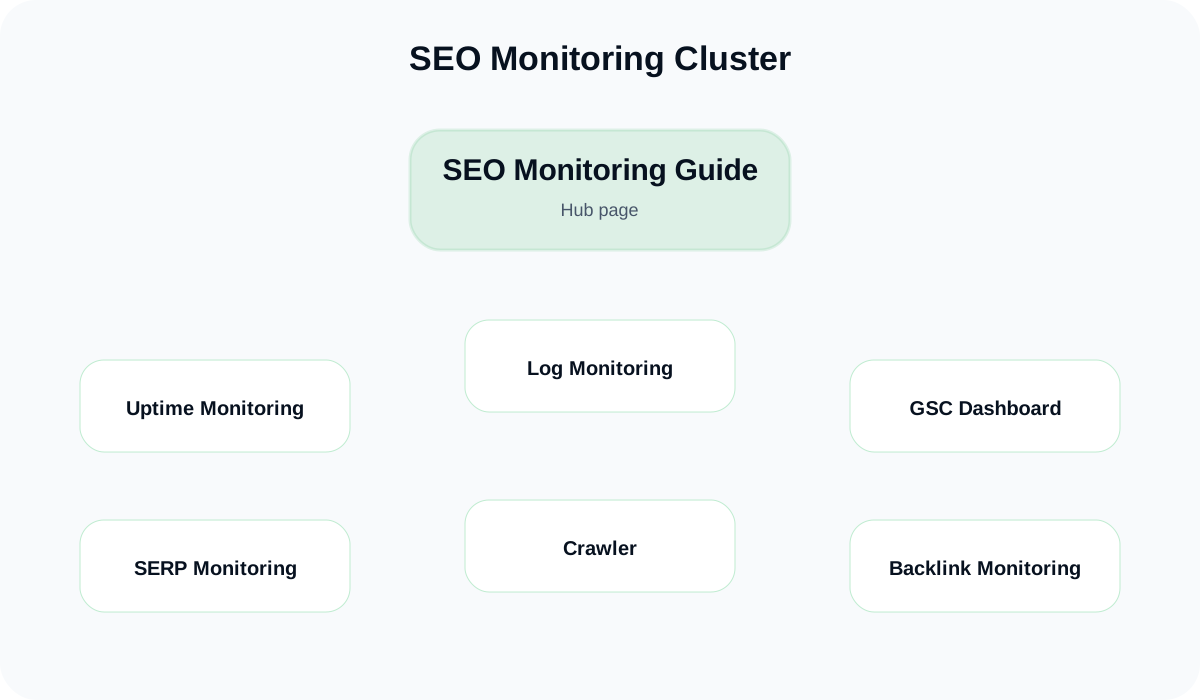
Understanding data is not enough — a good SEO report should explain what changed and what to do next, especially when alerts, logs and search performance move at the same time.
For backlink-specific workflows, use the link monitoring guide to connect lost links, link page indexation, Web Archive context and SERP movement.
For large sites, the crawl budget guide explains how crawling, logs, internal links and server health affect discovery of important pages.
\nConclusion
Monitoring Is a System, Not a Tool
SEO monitoring is not about one metric. It is about visibility, control, and fast reaction. A healthy monitoring workflow shows whether your website is available, crawlable, indexable, technically stable, and moving in the right direction.
From Data to Decisions
The goal is not to collect more dashboards. The goal is to understand what is happening and act before it impacts organic performance.
Explore the SEOMER tools workspace to connect monitoring, alerts, reports, and SEO intelligence in one place.