
Quick answer: Crawl depth is the number of clicks it takes to reach a page from important entry points such as the homepage, tools page or content hubs. Important pages should be easy for users and bots to reach.
Internal linking helps search engines understand priority. If important pages are buried too deep, isolated from clusters or missing contextual links, crawling and indexing can become weaker.
- Use crawl depth analysis to find deep or weak pages.
- Improve internal links from hubs, related articles and tool pages.
- Keep money pages close to strong navigation and content clusters.
- Connect crawl depth with the broader crawl budget guide.
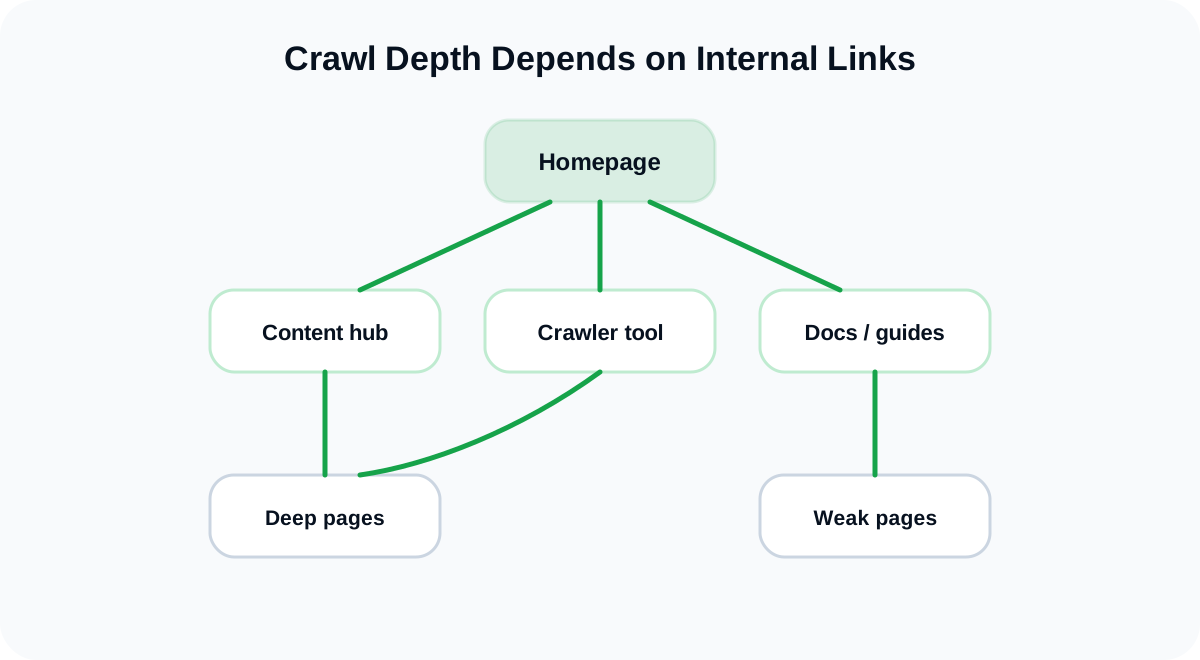
Table of contents
- What crawl depth means
- Why internal links matter
- How to fix weak crawl depth
- How clusters help crawling
What Crawl Depth Means
Depth Is a Priority Signal
Crawl depth is not only a technical metric. It also reflects page priority. If a page is five or six clicks away from the homepage, search engines may treat it as less important than a page linked from a hub, menu or strong article.
Deep Pages Are Not Always Bad
Not every deep page needs to rank. The problem appears when important pages are deep, isolated or reachable only through weak paths.
Why Internal Links Matter
Links Guide Bots
Internal links help bots discover pages and understand relationships. Contextual links inside articles are especially useful because they connect topic meaning with destination pages.
Links Distribute Strength
When a hub links to supporting articles and money pages, it creates a clear structure. For example, a technical SEO cluster can support the crawler tool through articles about crawl budget, logs, crawl depth and crawl waste.
How to Fix Weak Crawl Depth
Find Deep Pages
Use a crawler to identify pages with high click depth. Then decide whether those pages deserve stronger links or should stay low priority.
Add Contextual Links
Add links from relevant articles, hubs and tool pages. Do not add random footer links just to manipulate counts. Use anchors that explain why the destination matters.
Improve Hubs
Strong hubs help users and bots. A hub should link to the main page, supporting articles and related workflows.
How Clusters Help Crawling
Clusters Create Meaning
When crawl budget, logs, internal linking and crawl waste pages link together, Google sees a real topic cluster instead of isolated articles.
Clusters Support Money Pages
The goal is not only traffic to articles. The goal is to support important product pages such as the technical SEO crawler.
Conclusion
Crawl depth and internal linking are practical crawl budget levers. Improve structure, connect related content and keep important pages easy to reach.