
Quick answer
Backlink monitoring helps SEO teams track important links, detect link loss, verify placements, and react before lost backlinks quietly damage search performance. Link monitoring is not only about checking whether a URL exists. It is about knowing whether a link is still present, still useful, still indexed, and still worth keeping in your SEO workflow.
SEOMER supports manual uploads, dataset-based imports, smart bulk routing by target domain, configurable monitoring intervals, priority link alerts, placement review, and indexation checks for pages that contain links.
- Upload backlinks manually or in bulk.
- Monitor links at intervals selected by the user.
- Mark important links and receive alerts when they disappear.
- Compare uploaded datasets with existing placements and push only new links into review.
- Check whether pages with backlinks are indexed in Google through SERP-based checks.
Why backlink monitoring matters
Backlinks can support rankings, discovery, authority, and trust signals. But a backlink only helps while it actually exists and remains accessible. If the page is removed, the link disappears, the anchor changes, or the page falls out of the index, the value of that placement can drop quickly.
The problem is that link loss often happens silently. A team may pay for a placement, approve a linkbuilder task, or include a backlink in a report, but no one checks it again for weeks. By the time the issue is found, the link may have been missing for a long time.
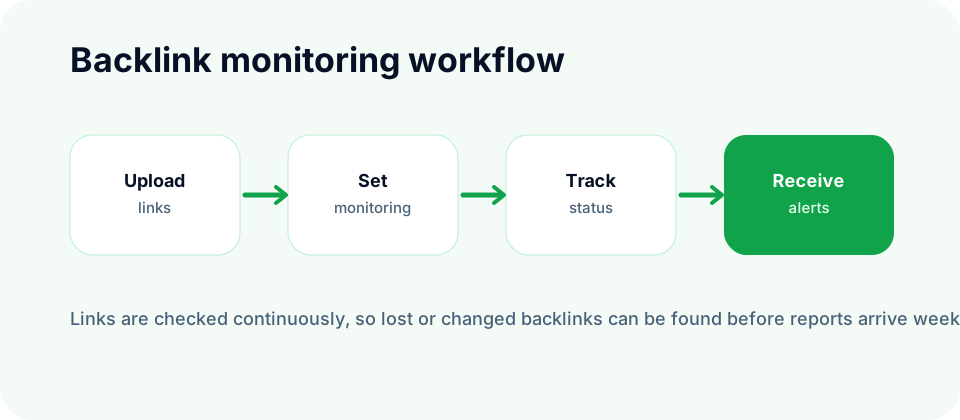
Backlink monitoring solves this by turning link control into a regular process. Instead of relying on memory or delayed third-party crawls, SEOMER keeps watched links under continuous monitoring and shows when something changes.
SEO impact
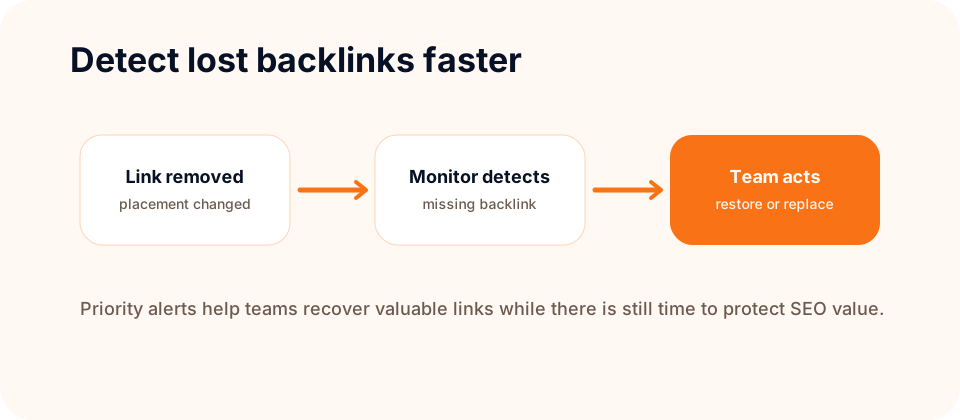
A lost high-value backlink can affect rankings, traffic, and linkbuilding ROI. Fast detection gives the team a chance to restore the link, replace it, contact the webmaster, or adjust the strategy before the loss becomes expensive.
The delay problem in backlink tools
Large SEO databases are useful, but they often detect link changes only after their crawlers revisit a page. Depending on the site, crawl frequency, page importance, and tool schedule, that delay can be days or weeks.
For reporting and historical backlink research, that may be acceptable. For active linkbuilding operations, it is not enough.
If a paid placement disappears today, the team should know today or within the monitoring interval they configured. Waiting until another external crawler notices the loss means reacting late.
Common mistake
Many teams treat backlink checking as a monthly task. That creates a blind spot between the moment a link disappears and the moment someone finally notices it.
Manual upload and link monitoring
SEOMER allows users to upload links manually and place them under monitoring. This is useful for smaller campaigns, manual placements, paid backlinks, guest posts, partner mentions, citations, and important URLs that need direct control.
After upload, the user can choose how often links should be checked. Some links may need frequent monitoring, while lower-priority links can be checked less often. The system gives users flexibility instead of forcing every link into the same schedule.
For each monitored link, SEOMER can track whether the page is available, whether the backlink is still present, whether the anchor or placement changed, and whether the link should trigger an alert if something goes wrong.
This makes link monitoring useful not only for SEO specialists, but also for owners and team leads who need proof that paid or assigned linkbuilding work is still active.
Dataset-based backlink workflow
Manual upload works well for direct control. But teams often work with larger backlink lists exported from external tools, internal datasets, client files, or linkbuilding spreadsheets.
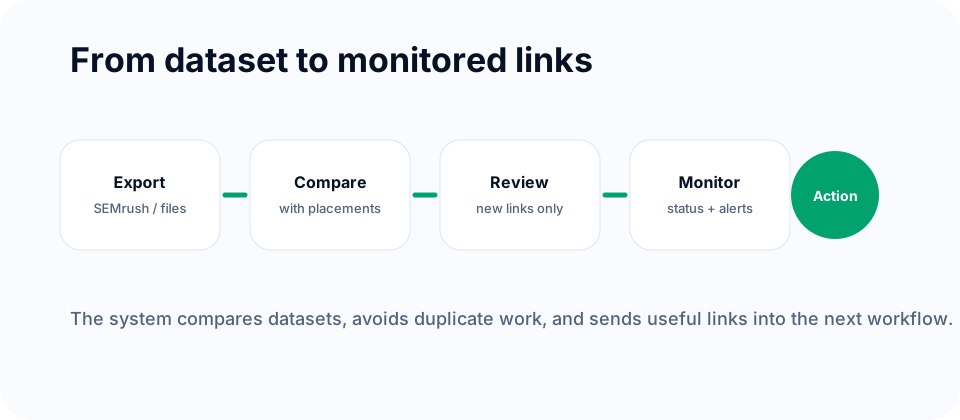
In SEOMER, those links can be uploaded as datasets and compared with existing placements. The system does not need to blindly duplicate every row. Instead, it can compare what already exists with what is new, remove duplicates from the workflow, and push only the difference into placement review.
A practical workflow looks like this:
- Export backlinks from a source such as SEMrush, another SEO tool, or an internal sheet.
- Upload the dataset into SEOMER.
- Compare dataset links with links already tracked in placements.
- Skip links that are already monitored.
- Push new or missing links into placement review.
- Accept, delete, monitor, or send suspicious links into the next action workflow.
This helps teams keep backlink data clean. They do not waste time reviewing the same links again and again, and they do not miss new links that should be checked.
Smart bulk upload for teams
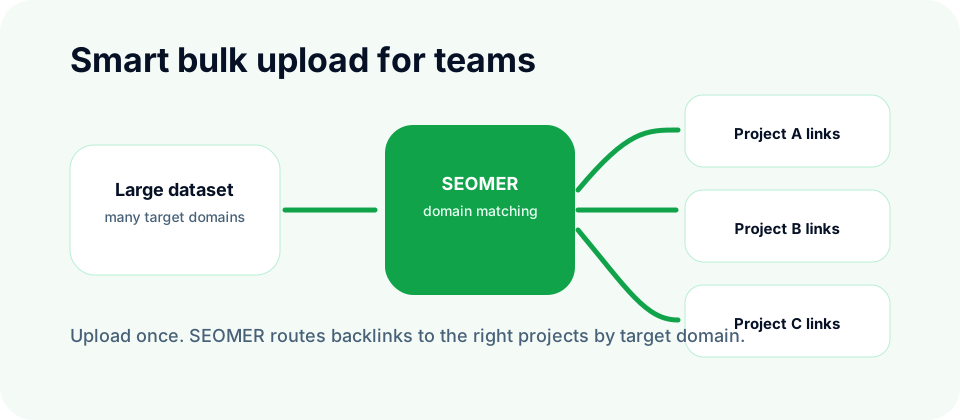
For agencies, SEO teams, and linkbuilders managing many websites, one of the biggest problems is sorting links by project. A large uploaded file may contain backlinks for multiple clients, target domains, or internal projects.
SEOMER is built around the idea that one project represents one website. During bulk upload, the system can analyze target domains and route links to the correct project automatically.
This means a linkbuilder does not need to manually split one large file into ten smaller files. The system can detect the target domain, match links with the proper project, and push them into the right placement workflow.
For teams, this creates a cleaner operational process:
- bulk upload once;
- auto-match links by target domain;
- send each link to the correct project;
- keep every project’s backlink monitoring separate;
- reduce manual mistakes and duplicated work.
SEOMER tip
Smart routing is especially useful for agencies. One upload can contain links for many projects, while SEOMER distributes them into the correct placements based on target domains.
Priority links and alerts
Not every backlink has the same value. Some links are strategic, expensive, hard to replace, or connected to important landing pages. Those links should not disappear quietly.
SEOMER allows users to mark important links and configure alerts when something changes. If a priority backlink is removed, the page becomes unavailable, or the placement changes, the team can be notified quickly.
Alerts can be connected with the wider SEOMER alert system, where issues can be delivered through the platform notification bell, email, Slack, Telegram, or other configured channels.
That gives teams a practical response path. If an important link disappears, the linkbuilder can contact the site owner, the SEO lead can replace the placement, or the team can decide whether the link is still worth recovering.
Indexation checks for link pages
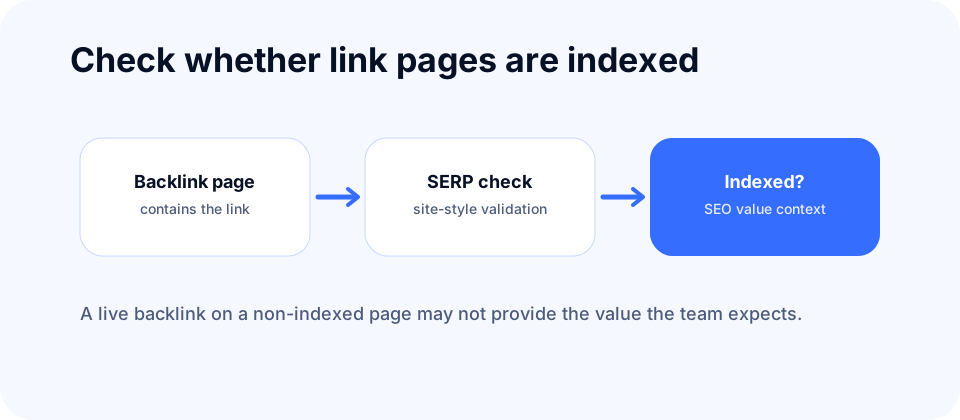
A backlink can exist on a page, but that does not automatically mean it provides value. If the page is not indexed, blocked, removed from search, or invisible to Google, the practical SEO value can be limited.
SEOMER can help check whether pages with links are indexed. The workflow can send link page URLs into SERP-based checks and verify whether Google recognizes those pages through site-style indexation checks.
This is useful when evaluating backlink quality. A linkbuilder may deliver a URL, but the SEO team still needs to know whether that page is visible in search. If the page is not indexed, the team can decide whether to wait, request a fix, replace the placement, or remove the link from active value calculations.
Practical value
Backlink monitoring shows whether the link exists. Indexation checks help answer the next question: does the page carrying the link actually matter for Google?
Workflow for linkbuilders and SEO teams
For linkbuilders, backlink monitoring reduces manual verification. They can upload work, validate whether links are present, check important placements, and see what needs attention.
For SEO leads, it creates control. They can review which links are live, which disappeared, which pages are indexed, and which placements require action.
For owners and team leads, it improves transparency. Instead of trusting a spreadsheet, they can see monitored link status inside the project workflow.
A typical team workflow might look like this:
- Linkbuilder uploads new backlink data.
- SEOMER compares it with existing placements.
- The system routes links to the correct project by target domain.
- Important links are marked for priority monitoring.
- Indexation checks validate whether link pages are visible.
- Alerts notify the responsible person if a valuable link disappears.
- The team decides whether to restore, replace, keep, remove, or escalate the link.
This turns linkbuilding from a static spreadsheet process into an active monitoring workflow.
Future integrations
SEOMER can also grow into deeper backlink workflows through API integrations. In the future, teams may connect sources such as SEMrush or other SEO datasets directly, import discovered backlinks automatically, compare them with monitored placements, and route new links into the correct project workflow.
The goal is not to replace every backlink discovery tool. The goal is to make backlink data actionable after it enters the system: monitor it, compare it, validate it, alert on it, and connect it with reports.
That is the difference between having backlink data and controlling backlink performance.
For the wider monitoring system, read the SEO monitoring guide.
Backlink checks become stronger when combined with historical data analysis, especially for dropped domains, changed pages and competitor research. Link signals also belong inside the wider SEO monitoring system.
For the complete workflow, read the link monitoring guide, which explains how to track backlinks, detect lost links, validate indexation and connect link data with SERP movement.
To go deeper, read how to detect lost backlinks before rankings drop and how to check if backlink pages are indexed.
Conclusion
Backlink monitoring is essential for teams that care about linkbuilding ROI, ranking stability, and SEO control. It helps detect lost links, validate placements, check indexation, reduce manual work, and keep important backlinks from disappearing unnoticed.
SEOMER turns link monitoring into a structured workflow: links are uploaded, compared, routed by project, monitored at configurable intervals, checked for indexation, and connected to alerts when something important changes.
For agencies, SEO teams, linkbuilders, and owners, this means fewer blind spots and faster decisions. Instead of finding link problems weeks later, teams can react while there is still time to protect the value of their placements.