
Quick answer
SEOMER is a modular Real-Time Website Intelligence & Monitoring Platform that connects SEO, technical monitoring, alerts, team workflows, and intelligence reports inside one workspace. Instead of forcing teams to jump between disconnected tools, SEOMER brings website changes, crawl data, uptime, logs, Google Search Console, SERP movement, backlinks, and reports into one operational system.
The platform is built for owners, founders, team leads, agencies, and SEO teams that need more than raw metrics. They need to understand what changed on a website, when it changed, whether the team completed the work, how Google reacted, and which risks need attention first.
- Use separate modules independently or combine them into one connected workflow.
- See website changes, technical issues, SEO signals, alerts, and reports in one place.
- Rely on code-level monitoring, operator logic, assistant workflows, and intelligence reports — with AI used as an explanation layer, not as a black box.
Why SEOMER is built as a modular platform
Most websites do not fail because teams have no tools. They fail because the important signals live in too many different places. One tool shows uptime, another shows rankings, another shows crawl issues, Google Search Console shows search performance, and someone still has to connect the dots manually.
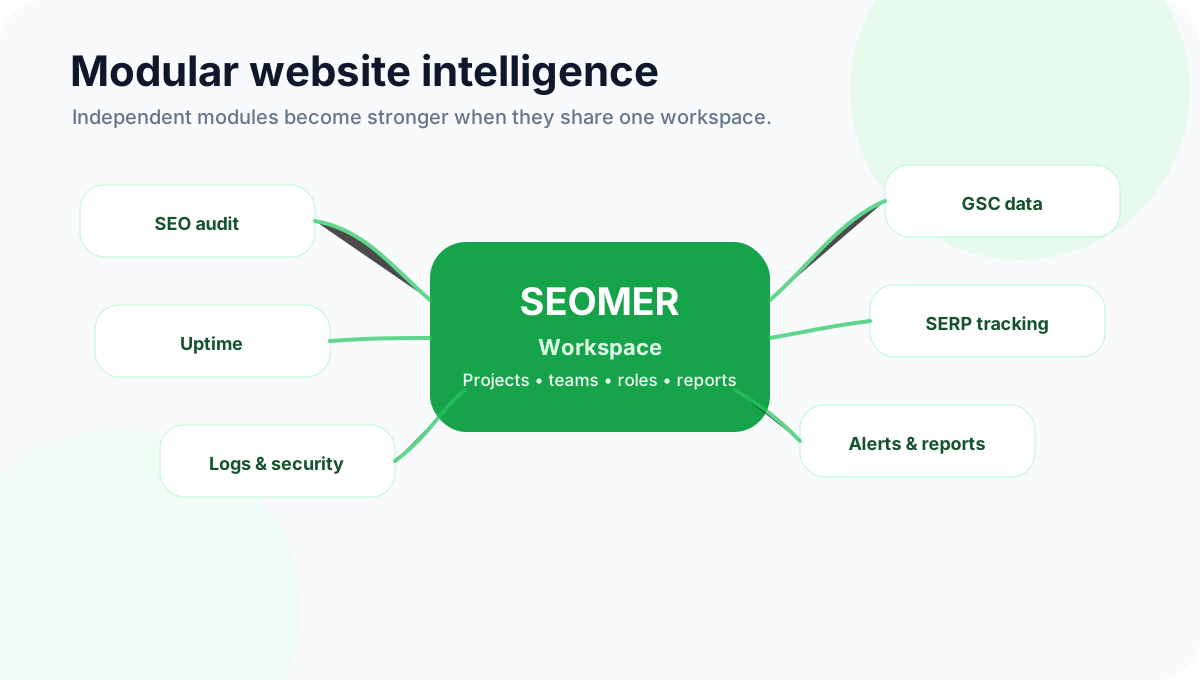
SEOMER takes a different approach. The platform is modular by design, but the modules are not isolated islands. Each module solves a specific problem, while the workspace connects the signals into a wider picture of website health, SEO performance, team activity, and technical risk.
Core idea
Modular does not mean “many unrelated features.” In SEOMER, modular means that every tool can work on its own, but the real value appears when uptime, crawling, GSC data, SERP, logs, links, alerts, and reports are connected inside one project workflow.
The problem with disconnected SEO tools
A typical website operations stack is fragmented. A team may use one service for uptime, another for backlinks, another for keyword tracking, a crawler for audits, Google Search Console for search data, spreadsheets for reports, and chat messages for task follow-up.
That setup can work when everything is calm. It breaks down when something changes. If traffic drops, rankings move, a page disappears from the index, or a deployment breaks part of the site, the team has to search across multiple systems to understand what happened.
Data is not the same as understanding
Raw metrics are useful, but they rarely answer the management question: what changed, why did it happen, and what should we do first?
This is the gap SEOMER is designed to close. The platform does not only collect signals. It helps turn signals into an operational view that owners, team leads, and specialists can actually use.
Website intelligence
The stronger workflow is not “open ten tools and compare screenshots.” The stronger workflow is: detect the change, connect it with surrounding signals, understand the risk, and act before the problem becomes a traffic or revenue loss.
One workspace for teams, projects, and signals
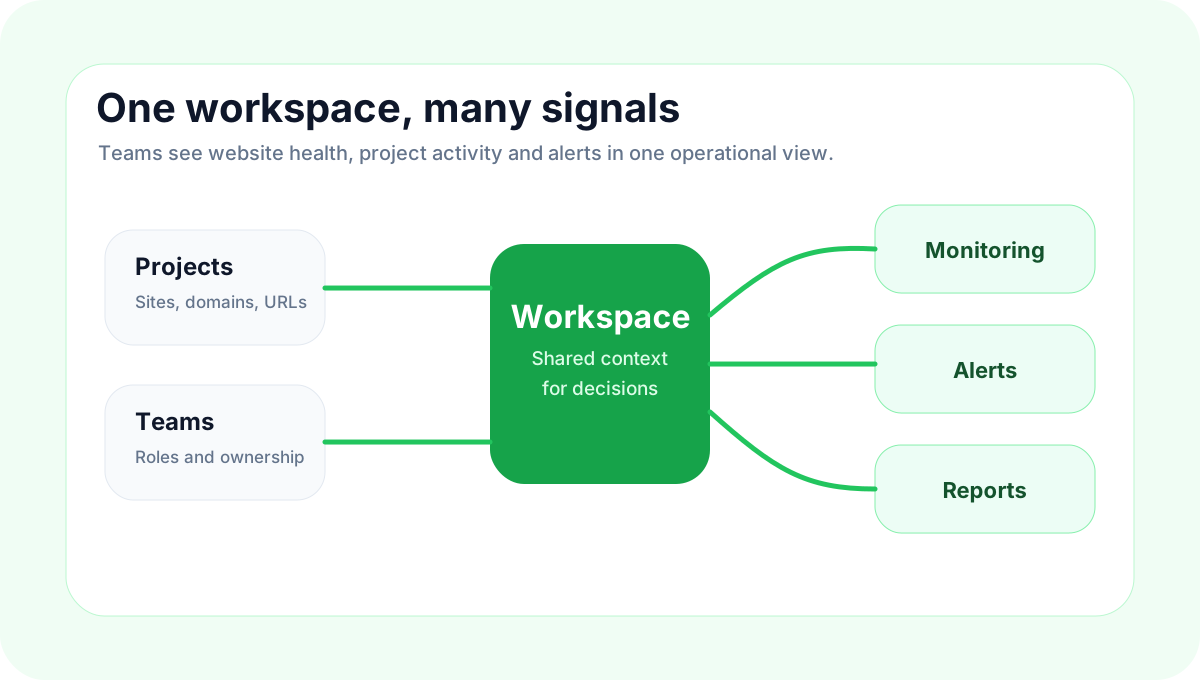
The workspace is the control layer of SEOMER. It brings together teams, roles, projects, modules, limits, and reports, so a company or agency can manage several websites without losing context.
Inside a workspace, a team can organize projects, invite members, assign responsibilities, control access, and monitor what is happening across different websites. This matters because website monitoring is not only a technical task. It is also a management task.
From project list to operational visibility
A project inside SEOMER is not just a saved domain. It is a living object of observation. The system can show what changed on the site, which pages were affected, whether critical services are working, how search visibility behaves, and whether alerts or reports need attention.
For an agency, this can mean faster control across client sites. For an in-house team, it can mean clearer responsibility. For an owner, it means fewer blind spots and less dependence on manual status updates.
How SEOMER modules work together
SEOMER modules can be used separately, but they are designed to become more powerful together. A single module may answer one question. A connected workflow answers the bigger question: what is happening with the website and what does it mean?
Below is how the core modules fit into the platform.
SEO audit and change monitoring
This layer helps track technical SEO issues and changes on pages: title, description, content, page structure, new URLs, removed URLs, and other important SEO elements. It helps teams verify whether work was actually implemented, not just reported as completed.
For example, if a team lead asks an SEO specialist to update 20 titles and descriptions, SEOMER can help show where the changes appeared and where old data still remains.
Google Search Console integration
The Google Search Console dashboard connects real Google performance data with the rest of the project. Clicks, impressions, CTR, average position, opportunities, and risks become more useful when they can be compared with crawl findings, indexation checks, page changes, alerts, and reports.
That connection helps answer a practical question: did the website change, and did Google start reacting to it?
Indexation monitoring
Indexation monitoring helps teams understand whether important pages are actually visible to Google. If a page is not indexed, ranking discussions become secondary. First, the team needs to know why the page is not available in search at all.
This module is especially useful when working with new landing pages, large site sections, programmatic pages, or technical fixes that need validation.
SERP monitoring
SERP monitoring tracks how positions and search results change over time. In isolation, rank tracking shows movement. Connected with crawler data, GSC, indexation, and competitor monitoring, it helps explain why movement may be happening.
Crawler and competitor monitoring
The crawler is not only about finding errors on your own site. It can also support competitor monitoring by detecting new pages, changed content, updated metadata, and structure shifts on competing websites.
This allows teams to answer two questions at once: what changed on our site, and what is changing in the market around us?
Backlink monitoring
Backlink monitoring helps track known links and their current state. The goal is not only to collect a large backlink list. The practical value is understanding whether important links still exist, whether they remain accessible, and whether they continue to support the project.
Uptime monitoring
Uptime monitoring checks whether critical pages and services are available. It helps detect downtime, unstable responses, server errors, and availability problems before they become SEO, conversion, or trust issues.
This is where technical monitoring becomes part of SEO intelligence. If visibility drops near a period of downtime or server errors, the team has a stronger starting point for investigation.
Log monitoring and security signals
Log monitoring shows what is happening at the server level: bot activity, request patterns, 3xx, 4xx, 5xx errors, anomalies, and suspicious behavior. For technical SEO and security awareness, logs provide a reality layer that dashboards often miss.
Web Archive and domain analysis
Web Archive analysis adds historical context. It can help with domain research, competitor analysis, content history, and understanding how a website changed over time.
SEOMER tip
The value is not in checking more things. The value is in connecting checks into a timeline: what changed on the website, what changed in Google, what changed in the SERP, and what technical signals appeared at the same time.
Code-level operator, assistant, and intelligence reports
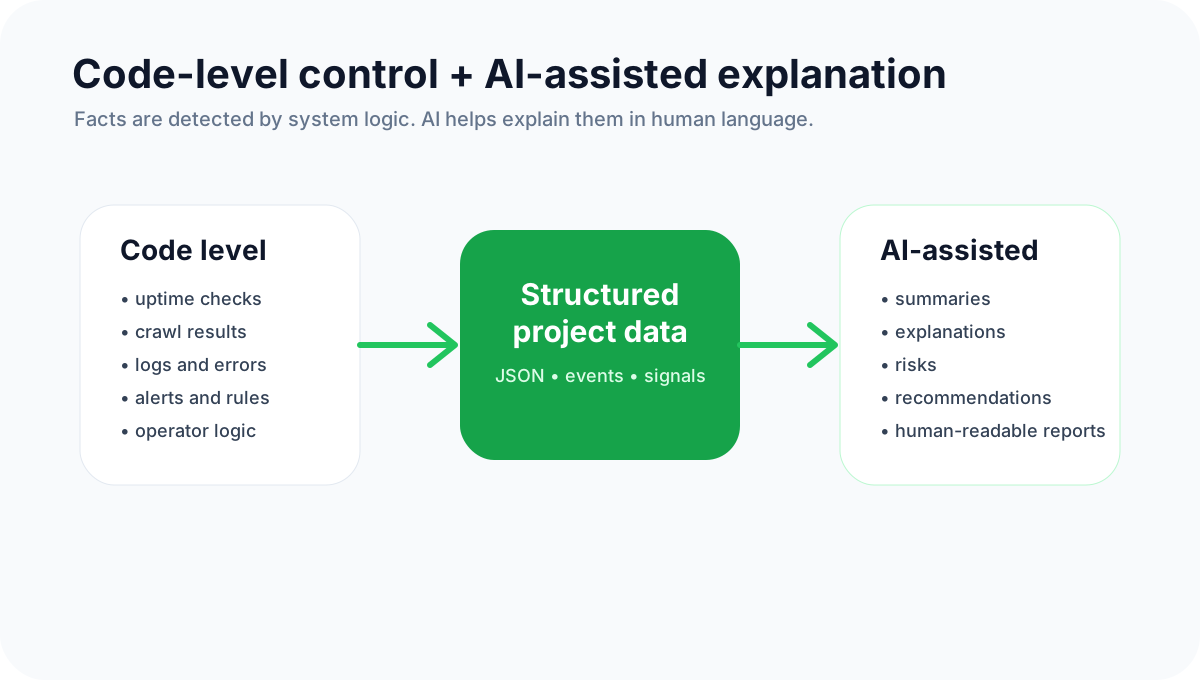
SEOMER uses modern AI-style reporting, but the platform is not built on vague AI magic. The core logic runs at the code level. Monitoring checks, alert rules, module health, operator logic, assistant workflows, voice interactions, and intelligence reports are based on structured data and deterministic system behavior.
This distinction matters. Critical signals should not be guessed. If a site is down, a backup did not run, a module stopped responding, a page returned a 500 error, or an indexation check failed, that must be detected by the system itself.
What the code-level operator does
The operator layer watches platform activity and helps keep modules, checks, services, and workflows under control. It is designed to support the idea that SEOMER should behave like a website control system, not just a passive dashboard.
The operator can help track whether modules are active, whether checks are running, whether services are responding, and whether critical signals should trigger attention.
Where AI fits
AI is used as an explanation layer on top of structured platform data. It helps turn technical events into summaries, recommendations, and human-readable reports. In simple terms, the code detects and structures the facts; AI helps explain them clearly.
This is the right balance: reliable detection at the system level, and modern explanation at the human level.
Important distinction
SEOMER does not depend on AI to decide whether a critical technical event exists. The system detects signals at the code level, then uses AI-assisted explanations to help users understand what happened, why it matters, and what should be reviewed first.
Alerts as a website control system
Alerts are one of the most important parts of the platform. A good alert system does not create noise. It tells the right person about the right issue at the right time.
SEOMER is designed to act like a smart website signal system. If everything is fine, it does not need to interrupt the team. If something important changes, it should surface that information quickly.
What can trigger attention
Alerts may be connected to uptime issues, 4xx and 5xx errors, indexation problems, sudden visibility changes, suspicious log activity, failed checks, module problems, or other critical events. The purpose is to shorten the time between problem and reaction.
This becomes especially important for teams managing multiple sites. Nobody can manually check every project, every module, and every report all day. The platform has to watch continuously and tell the team when something deserves attention.
Why this matters for owners and team leads
Most SEO tools are built primarily for specialists. SEOMER is also useful for specialists, but the platform is designed with owners and team leads in mind.
Owners usually do not need more screenshots. They need operational clarity. They want to know what changed, whether the team did the work, whether the website is healthy, whether search visibility is moving, and whether there are problems that can cost traffic or revenue.
Less “trust me”, more visible work
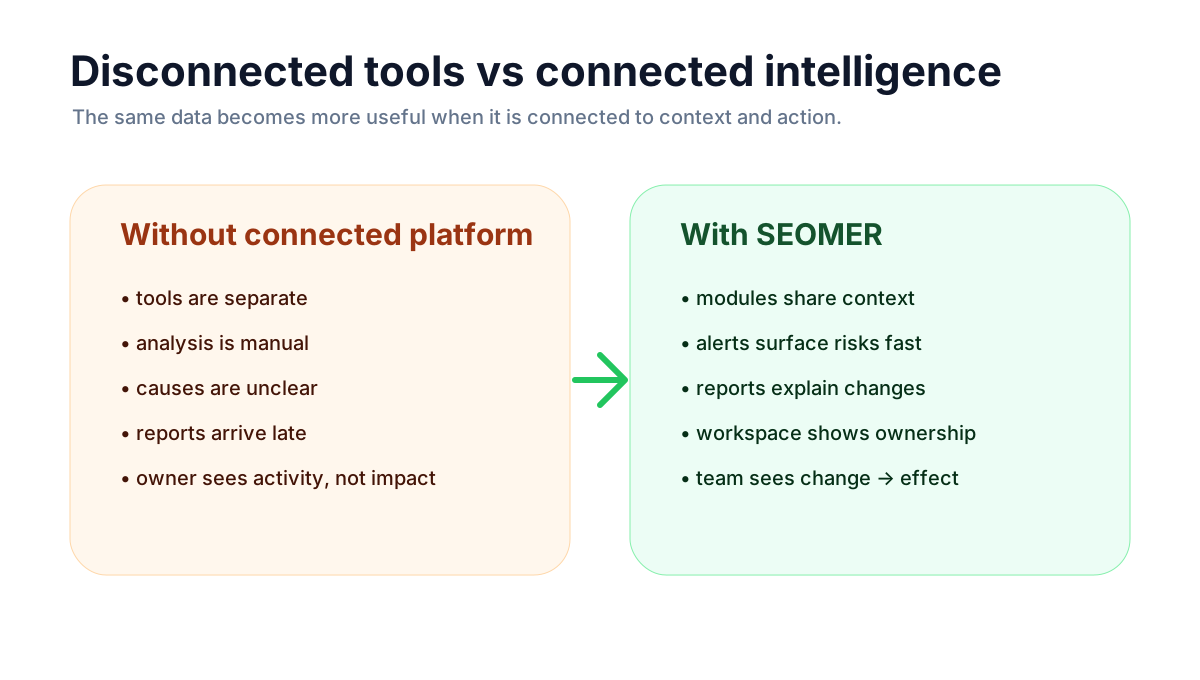
A common problem in website and SEO work is the gap between reported activity and visible impact. Someone says titles were updated, pages were changed, issues were fixed, or competitors were checked. But the owner still has to trust the report or verify manually.
SEOMER is built to reduce that gap. The platform helps show what was changed, where it was changed, when it appeared, and which signals moved afterward.
Management value
The strongest benefit is transparency. Owners and team leads can see website health, SEO changes, monitoring signals, team activity, and reports without manually collecting information from separate tools.
The future direction of SEOMER
SEOMER is moving toward a broader website intelligence model. The goal is not only to show data, but to help teams understand the condition of a website, the work being done, the risks that appeared, and the actions that should be prioritized.
That future combines code-level monitoring, modular tools, alerts, assistant workflows, voice interaction, structured intelligence reports, and AI-assisted explanations.
From monitoring to decision support
The next step for website platforms is not simply more charts. It is decision support. A useful system should help users understand what happened, what matters, what is urgent, and what can wait.
That is the direction SEOMER is built for: a platform that watches the website continuously, connects signals, and helps people make better decisions faster.
For link workflows inside the modular platform, the link monitoring guide explains how backlink monitoring connects with crawler, SERP and Web Archive modules.
Conclusion
SEOMER is built as a modular website intelligence platform because modern website work is too connected to be managed through disconnected tools. SEO, uptime, logs, indexation, GSC data, SERP changes, backlinks, competitors, alerts, and reports all affect the same business outcome: whether the website is healthy, visible, and moving in the right direction.
The platform’s modular structure lets teams start with the modules they need and grow into a connected workflow over time. Its workspace model gives owners and team leads operational visibility. Its code-level operator, assistant, voice workflows, alerts, and intelligence reports help keep control where it belongs: on real signals, clear logic, and understandable explanations.
That is the core idea behind SEOMER: not just more data, but a clearer way to control what is happening across your websites.